For the following exercises, use the definition of a derivative to find
← Back to Calculus Volume 1
Calculus Volume 1 · 3.2 The Derivative as a Function
The Derivative as a Function: practice problems
30 problems from the book, with its answers. Check your working, or have any of them explained to you on the whiteboard.
Exercises 57
For the following exercises, use the definition of a derivative to find
Exercises 59
For the following exercises, use the definition of a derivative to find
Exercises 61
For the following exercises, use the definition of a derivative to find
Exercises 63
For the following exercises, use the definition of a derivative to find
Exercises 65
For the following exercises, use the graph of to sketch the graph of its derivative
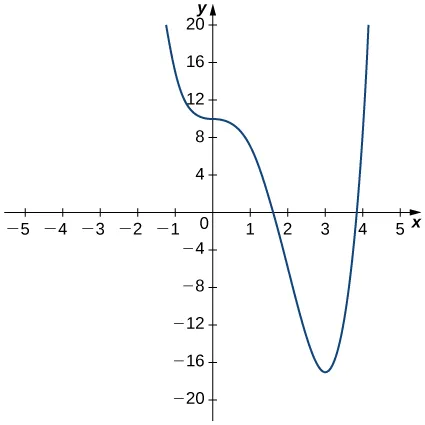
Exercises 67
For the following exercises, use the graph of to sketch the graph of its derivative
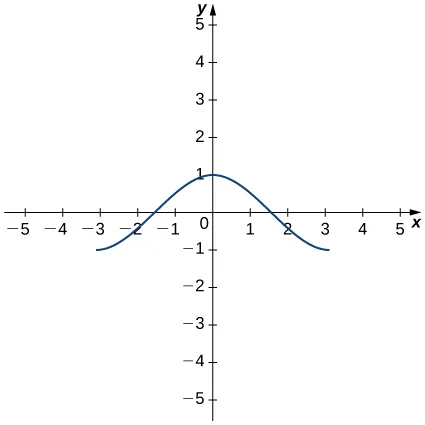
Exercises 69
For the following exercises, the given limit represents the derivative of a function at Find and
Exercises 71
For the following exercises, the given limit represents the derivative of a function at Find and
Exercises 73
For the following exercises, the given limit represents the derivative of a function at Find and
Exercises 75
For the following functions,
- sketch the graph and
- use the definition of a derivative to show that the function is not differentiable at
Exercises 77
For the following functions,
- sketch the graph and
- use the definition of a derivative to show that the function is not differentiable at
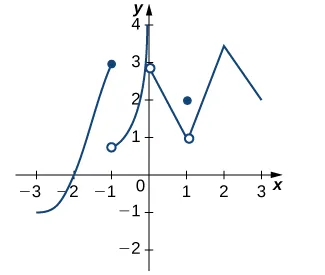
Exercises 79
For the following graphs,
- determine for which values of the exists but is not continuous at and
- determine for which values of the function is continuous but not differentiable at
Exercises 85
For the following exercises, use a calculator to graph Determine the function then use a calculator to graph
[T]
Exercises 87
For the following exercises, use a calculator to graph Determine the function then use a calculator to graph
[T]
Exercises 89
For the following exercises, use a calculator to graph Determine the function then use a calculator to graph
[T]
Exercises 91
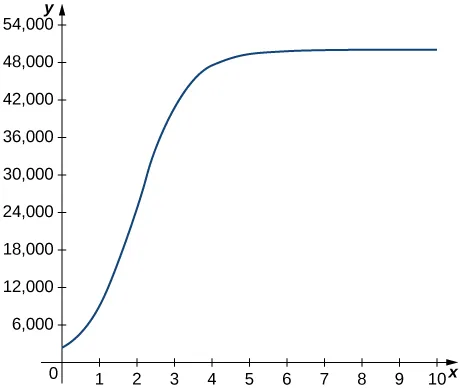
For the following exercises, describe what the two expressions represent in terms of each of the given situations. Be sure to include units.
Exercises 93
For the following exercises, describe what the two expressions represent in terms of each of the given situations. Be sure to include units.
Exercises 95
For the following exercises, describe what the two expressions represent in terms of each of the given situations. Be sure to include units.
Exercises 97
For the following exercises, describe what the two expressions represent in terms of each of the given situations. Be sure to include units.
Exercises 99
For the following exercises, describe what the two expressions represent in terms of each of the given situations. Be sure to include units.
Exercises 101
For the following exercises, use the following table, which shows the height of the Saturn rocket for the Apollo mission seconds after launch.
Time (seconds) Height (meters) Exercises 103
For the following exercises, use the following table, which shows the height of the Saturn rocket for the Apollo mission seconds after launch.
Time (seconds) Height (meters) Exercises 105
For the following exercises, use the following table, which shows the height of the Saturn rocket for the Apollo mission seconds after launch.
Time (seconds) Height (meters) Review Exercises 367
True or False? Justify the answer with a proof or a counterexample.
Every function has a derivative.
Review Exercises 369
True or False? Justify the answer with a proof or a counterexample.
A continuous function has a derivative.
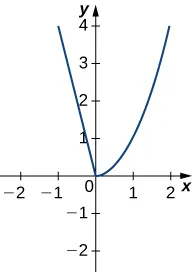
Review Exercises 371
Use the limit definition of the derivative to exactly evaluate the derivative.
Key terms · 5
- derivative function
- gives the derivative of a function at each point in the domain of the original function for which the derivative is defined
- differentiable at a
- a function for which $f' (a)$ exists is differentiable at $a$
- differentiable on S
- a function for which $f' (x)$ exists for each $x$ in the open set $S$ is differentiable on $S$
- differentiable function
- a function for which $f' (x)$ exists is a differentiable function
- higher-order derivative
- a derivative of a derivative, from the second derivative to the nth derivative, is called a higher-order derivative
Learn 3.2 on the whiteboard
The tutor teaches the whole section, drawing it out step by step and answering your questions as you go.