For the following exercises, evaluate the given exponential functions as indicated, accurate to two significant digits after the decimal.
a. b. c.
Preparing your lesson…正在准备你的课程…正在準備你的課程…Preparando tu lección…Préparation de votre leçon…Deine Lektion wird vorbereitet…Sto preparando la tua lezione…Preparando sua aula…レッスンを準備しています…수업을 준비하고 있어요…Menyediakan pelajaran anda…Menyiapkan pelajaranmu…
Preparing your lesson…正在准备你的课程…正在準備你的課程…Preparando tu lección…Préparation de votre leçon…Deine Lektion wird vorbereitet…Sto preparando la tua lezione…Preparando sua aula…レッスンを準備しています…수업을 준비하고 있어요…Menyediakan pelajaran anda…Menyiapkan pelajaranmu…
Calculus Volume 1 · 1.5 Exponential and Logarithmic Functions
45 problems from the book, with its answers. Check your working, or have any of them explained to you on the whiteboard.
Exercises 229
For the following exercises, evaluate the given exponential functions as indicated, accurate to two significant digits after the decimal.
a. b. c.
Exercises 231
For the following exercises, evaluate the given exponential functions as indicated, accurate to two significant digits after the decimal.
a. b. c.
Exercises 233
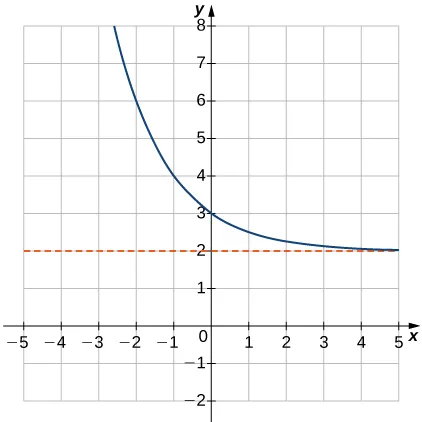
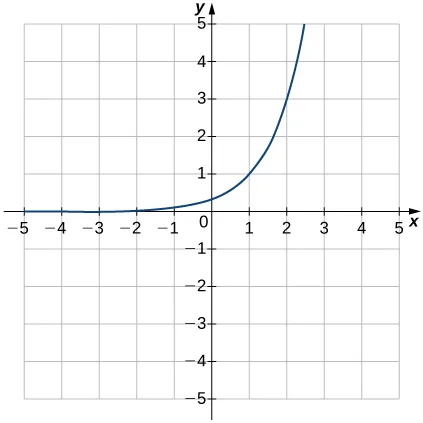
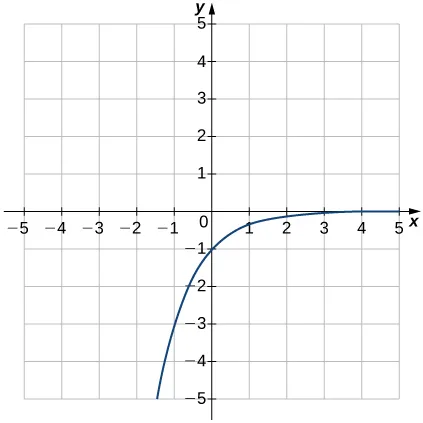
For the following exercises, match the exponential equation to the correct graph.
Exercises 235
For the following exercises, match the exponential equation to the correct graph.
Exercises 237
For the following exercises, match the exponential equation to the correct graph.
Exercises 239
For the following exercises, sketch the graph of the exponential function. Determine the domain, range, and horizontal asymptote.
Exercises 241
For the following exercises, sketch the graph of the exponential function. Determine the domain, range, and horizontal asymptote.
Exercises 243
For the following exercises, sketch the graph of the exponential function. Determine the domain, range, and horizontal asymptote.
Exercises 245
For the following exercises, sketch the graph of the exponential function. Determine the domain, range, and horizontal asymptote.
Exercises 247
For the following exercises, write the equation in equivalent exponential form.
Exercises 249
For the following exercises, write the equation in equivalent exponential form.
Exercises 251
For the following exercises, write the equation in equivalent exponential form.
Exercises 253
For the following exercises, write the equation in equivalent exponential form.
Exercises 255
For the following exercises, write the equation in equivalent logarithmic form.
Exercises 257
For the following exercises, write the equation in equivalent logarithmic form.
Exercises 259
For the following exercises, write the equation in equivalent logarithmic form.
Exercises 261
For the following exercises, write the equation in equivalent logarithmic form.
Exercises 263
For the following exercises, write the equation in equivalent logarithmic form.
Exercises 265
For the following exercises, sketch the graph of the logarithmic function. Determine the domain, range, and vertical asymptote.
Exercises 267
For the following exercises, sketch the graph of the logarithmic function. Determine the domain, range, and vertical asymptote.
Exercises 269
For the following exercises, sketch the graph of the logarithmic function. Determine the domain, range, and vertical asymptote.
Exercises 271
For the following exercises, use properties of logarithms to write the expressions as a sum, difference, and/or product of logarithms.
Exercises 273
For the following exercises, use properties of logarithms to write the expressions as a sum, difference, and/or product of logarithms.
Exercises 275
For the following exercises, use properties of logarithms to write the expressions as a sum, difference, and/or product of logarithms.
Exercises 277
For the following exercises, solve the exponential equation exactly.
Exercises 279
For the following exercises, solve the exponential equation exactly.
Exercises 281
For the following exercises, solve the exponential equation exactly.
Exercises 283
For the following exercises, solve the exponential equation exactly.
Exercises 285
For the following exercises, solve the logarithmic equation exactly, if possible.
Exercises 287
For the following exercises, solve the logarithmic equation exactly, if possible.
Exercises 289
For the following exercises, solve the logarithmic equation exactly, if possible.
Exercises 291
For the following exercises, solve the logarithmic equation exactly, if possible.
Exercises 293
For the following exercises, use the change-of-base formula and either base 10 or base e to evaluate the given expressions. Answer in exact form and in approximate form, rounding to four decimal places.
Exercises 295
For the following exercises, use the change-of-base formula and either base 10 or base e to evaluate the given expressions. Answer in exact form and in approximate form, rounding to four decimal places.
Exercises 297
For the following exercises, use the change-of-base formula and either base 10 or base e to evaluate the given expressions. Answer in exact form and in approximate form, rounding to four decimal places.
Exercises 299
For the following exercises, use the change-of-base formula and either base 10 or base e to evaluate the given expressions. Answer in exact form and in approximate form, rounding to four decimal places.
[T] The number of bacteria N in a culture after t days can be modeled by the function Find the number of bacteria present after 15 days.
Exercises 301
For the following exercises, use the change-of-base formula and either base 10 or base e to evaluate the given expressions. Answer in exact form and in approximate form, rounding to four decimal places.
[T] The amount A of a $100,000 investment paying continuously and compounded for t years is given by Find the amount A accumulated in 5 years.
Exercises 303
For the following exercises, use the change-of-base formula and either base 10 or base e to evaluate the given expressions. Answer in exact form and in approximate form, rounding to four decimal places.
[T] The concentration of hydrogen ions in a substance is denoted by measured in moles per liter. The pH of a substance is defined by the logarithmic function This function is used to measure the acidity of a substance. The pH of water is 7. A substance with a pH less than 7 is an acid, whereas one that has a pH of more than 7 is a base.
Exercises 305
For the following exercises, use the change-of-base formula and either base 10 or base e to evaluate the given expressions. Answer in exact form and in approximate form, rounding to four decimal places.
[T] According to the World Bank, at the end of 2013 (
) the U.S. population was 316 million and was increasing according to the following model:
where P is measured in millions of people and t is measured in years after 2013.
Exercises 307
For the following exercises, use the change-of-base formula and either base 10 or base e to evaluate the given expressions. Answer in exact form and in approximate form, rounding to four decimal places.
[T] A bacterial colony grown in a lab is known to double in number in 12 hours. Suppose, initially, there are 1000 bacteria present.
Exercises 309
For the following exercises, use the change-of-base formula and either base 10 or base e to evaluate the given expressions. Answer in exact form and in approximate form, rounding to four decimal places.
[T] The 1906 earthquake in San Francisco had a magnitude of 8.3 on the Richter scale. At the same time, in Japan, an earthquake with magnitude 4.9 caused only minor damage. Approximately how much more intense was the San Francisco earthquake than the Japanese earthquake? See the definition of Richter Scale in [link] in this section.
Review Exercises 311
True or False? Justify your answer with a proof or a counterexample.
assuming f and g are functions.
Review Exercises 333
For the following problems, consider the population of Ocean City, New Jersey, which is cyclical by season.
The population can be modeled by where is time in months represents January 1) and is population (in thousands). During a year, in what intervals is the population less than 20,000? During what intervals is the population more than 140,000?
Review Exercises 335
For the following problems, consider radioactive dating. A human skeleton is found in an archeological dig. Carbon dating is implemented to determine how old the skeleton is by using the equation where is the ratio of radiocarbon still present in the material, is the number of years passed, and is the decay rate of radiocarbon.
If the skeleton is expected to be 2000 years old, what percentage of radiocarbon should be present?
The tutor teaches the whole section, drawing it out step by step and answering your questions as you go.