Account for the increase in reaction rate brought about by a catalyst.
← Back to Chemistry 2e
Chemistry 2e · 12.7 Catalysis
Catalysis: practice problems
5 problems from the book, with its answers. Check your working, or have any of them explained to you on the whiteboard.
Exercises 78
Consider this scenario and answer the following questions: Chlorine atoms resulting from decomposition of chlorofluoromethanes, such as CCl₂F₂, catalyze the decomposition of ozone in the atmosphere. One simplified mechanism for the decomposition is:
(a) Explain why chlorine atoms are catalysts in the gas-phase transformation:
(b) Nitric oxide is also involved in the decomposition of ozone by the mechanism:
Is NO a catalyst for the decomposition? Explain your answer.
Exercises 80
For each of the following pairs of reaction diagrams, identify which of the pairs is catalyzed:
(a)
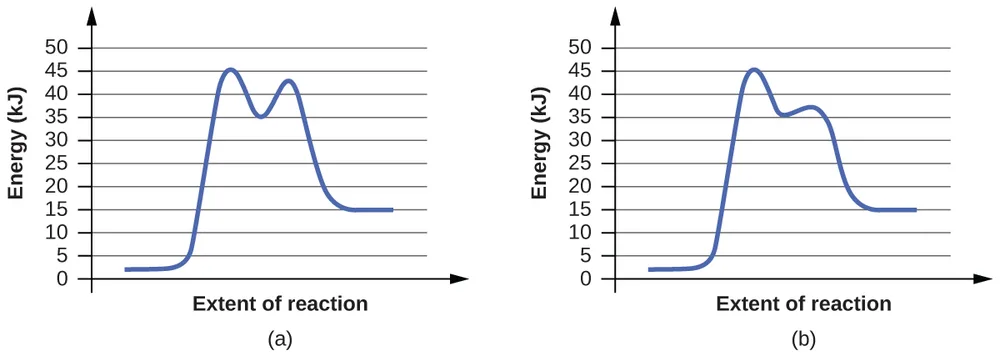
(b)
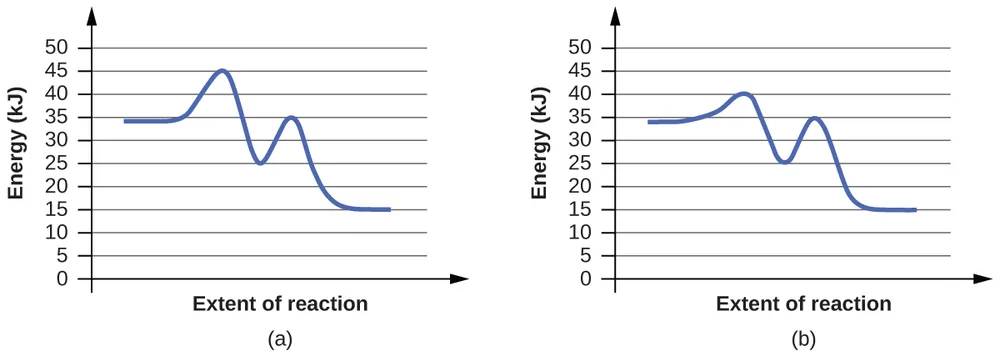
Exercises 82
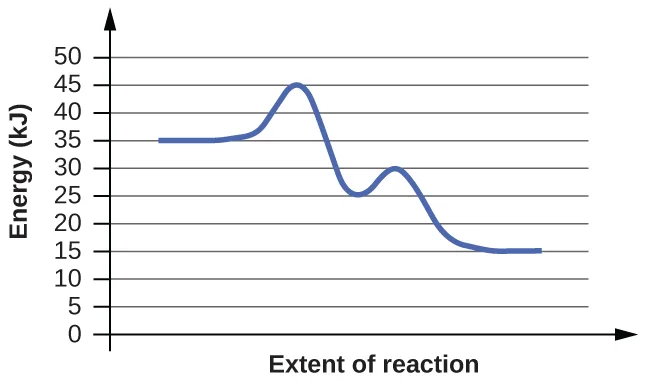
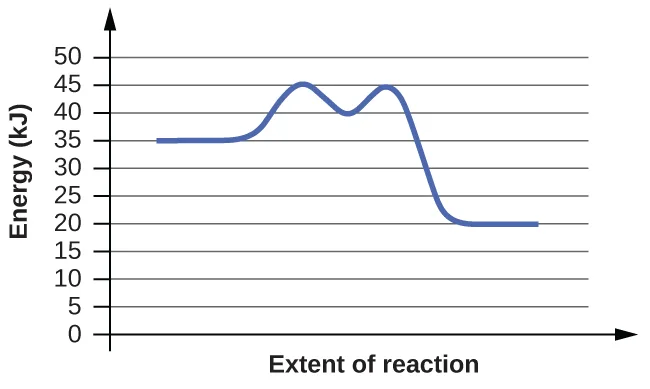
For each of the following reaction diagrams, estimate the activation energy (E) of the reaction:
(a)
(b)
Exercises 84
Consider the similarities and differences in the two reaction diagrams shown in Exercise 12.82. Do these diagrams represent two different overall reactions, or do they represent the same overall reaction taking place by two different mechanisms? Explain your answer.
Key terms · 2
- heterogeneous catalyst
- catalyst present in a different phase from the reactants, furnishing a surface at which a reaction can occur
- homogeneous catalyst
- catalyst present in the same phase as the reactants
Learn 12.7 on the whiteboard
The tutor teaches the whole section, drawing it out step by step and answering your questions as you go.