Explain why the symbol for an atom of the element oxygen and the formula for a molecule of oxygen differ.
← Back to Chemistry 2e
Chemistry 2e · 2.4 Chemical Formulas
Chemical Formulas: practice problems
4 problems from the book, with its answers. Check your working, or have any of them explained to you on the whiteboard.
Exercises 29
Write the molecular and empirical formulas of the following compounds:
(a)

(b)

(c)
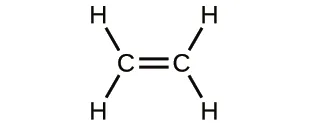
(d)
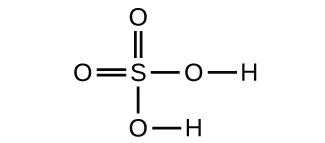
Exercises 31
Determine the empirical formulas for the following compounds:
(a) caffeine, C₈H₁₀N₄O₂
(b) sucrose, C₁₂H₂₂O₁₁
(c) hydrogen peroxide, H₂O₂
(d) glucose, C₆H₁₂O₆
(e) ascorbic acid (vitamin C), C₆H₈O₆
Exercises 33
Write the empirical formulas for the following compounds:
(a)
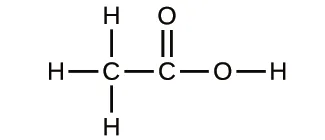
(b)

Key terms · 6
- empirical formula
- formula showing the composition of a compound given as the simplest whole-number ratio of atoms
- isomers
- compounds with the same chemical formula but different structures
- molecular formula
- formula indicating the composition of a molecule of a compound and giving the actual number of atoms of each element in a molecule of the compound.
- spatial isomers
- compounds in which the relative orientations of the atoms in space differ
- structural formula
- shows the atoms in a molecule and how they are connected
- structural isomer
- one of two substances that have the same molecular formula but different physical and chemical properties because their atoms are bonded differently
Learn 2.4 on the whiteboard
The tutor teaches the whole section, drawing it out step by step and answering your questions as you go.