What is the limiting reactant in a reaction that produces sodium chloride from 8 g of sodium and 8 g of diatomic chlorine?
← Back to Chemistry 2e
Chemistry 2e · 4.4 Reaction Yields
Limiting reactant and percent yield: practice problems
9 problems from the book, with its answers. Check your working, or have any of them explained to you on the whiteboard.
How to approach these problems
Convert every reactant to moles first. Then, for each one, work out how much product it could make on its own, using the mole ratio from the balanced equation: the reactant that makes the least product is the limiting reactant, and that amount is the theoretical yield. Comparing the moles of the reactants directly only works when their coefficients are equal. Percent yield is the actual yield divided by the theoretical yield, times 100, with both in the same units. The usual mistakes: picking the reactant with the smaller mass, forgetting that Cl₂ and O₂ are diatomic when you find their moles, and working out the yield from the reactant in excess.
Exercises 63
A student isolated 25 g of a compound following a procedure that would theoretically yield 81 g. What was his percent yield?
Exercises 65
Freon-12, CCl₂F₂, is prepared from CCl₄ by reaction with HF. The other product of this reaction is HCl. Outline the steps needed to determine the percent yield of a reaction that produces 12.5 g of CCl₂F₂ from 32.9 g of CCl₄. Freon-12 has been banned and is no longer used as a refrigerant because it catalyzes the decomposition of ozone and has a very long lifetime in the atmosphere. Determine the percent yield.
Exercises 67
Toluene, C₆H₅CH₃, is oxidized by air under carefully controlled conditions to benzoic acid, C₆H₅CO₂H, which is used to prepare the food preservative sodium benzoate, C₆H₅CO₂Na. What is the percent yield of a reaction that converts 1.000 kg of toluene to 1.21 kg of benzoic acid?
Exercises 69
Outline the steps needed to solve the following problem, then do the calculations. Ether, (C₂H₅)₂O, which was originally used as an anesthetic but has been replaced by safer and more effective medications, is prepared by the reaction of ethanol with sulfuric acid.
2C₂H₅OH + H₂SO₄ ⟶ (C₂H₅)₂O + H₂SO₄·H₂O
What is the percent yield of ether if 1.17 L (d = 0.7134 g/mL) is isolated from the reaction of 1.500 L of C₂H₅OH
(d = 0.7894 g/mL)?
Exercises 71
Outline the steps needed to determine the limiting reactant when 0.50 mol of Cr and 0.75 mol of H₃PO₄ react according to the following chemical equation.
Exercises 73
Uranium can be isolated from its ores by dissolving it as UO₂(NO₃)₂, then separating it as solid UO₂(C₂O₄)·3H₂O. Addition of 0.4031 g of sodium oxalate, Na₂C₂O₄, to a solution containing 1.481 g of uranyl nitrate, UO₂(NO₃)₂, yields 1.073 g of solid UO₂(C₂O₄)·3H₂O.
Na₂C₂O₄ + UO₂(NO₃)₂ + 3H₂O ⟶ UO₂(C₂O₄)·3H₂O + 2NaNO₃
Determine the limiting reactant and the percent yield of this reaction.
Exercises 75
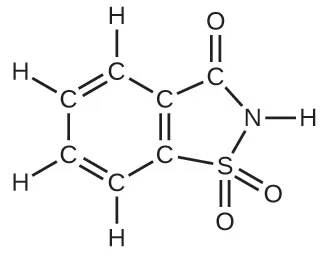
How many molecules of the sweetener saccharin can be prepared from 30 C atoms, 25 H atoms, 12 O atoms, 8 S atoms, and 14 N atoms?
Exercises 77
Would you agree to buy 1 trillion (1,000,000,000,000) gold atoms for $5? Explain why or why not. Find the current price of gold at http://money.cnn.com/data/commodities/
Key terms · 5
- actual yield
- amount of product formed in a reaction
- excess reactant
- reactant present in an amount greater than required by the reaction stoichiometry
- limiting reactant
- reactant present in an amount lower than required by the reaction stoichiometry, thus limiting the amount of product generated
- percent yield
- measure of the efficiency of a reaction, expressed as a percentage of the theoretical yield
- theoretical yield
- amount of product that may be produced from a given amount of reactant(s) according to the reaction stoichiometry
Learn 4.4 on the whiteboard
The tutor teaches the whole section, drawing it out step by step and answering your questions as you go.